Digital Scanning in Implant Prosthodontics: State of the Art
DOI:
https://doi.org/10.3889/mmej.2025.6590Keywords:
digital scanning, conventional impressions, dental scanners, implant prosthodontics, partially and completely edentulous patientsAbstract
Background: Accurate impressions are essential for implant-supported prostheses to ensure proper fit, function, and long-term success. Ill-fitting prostheses may lead to biological and technical complications.
Objective: This lecture aims to provide a state-of-the-art overview of digital scanning techniques in implant prosthodontics and compare their accuracy to conventional impression methods.
Content: Digital workflows, including intraoral, extraoral, and photogrammetry-based scanning, utilize CAD/CAM and 3D-printing technologies. Accuracy—assessed as trueness and precision, angular and linear deviations, interimplant distances, and scan-body fit—is the primary outcome. Secondary outcomes include the influence of scanner type, implant angulation, and configuration. Evidence from in vitro and clinical studies indicates that digital methods can achieve accuracy comparable to conventional techniques in selected cases.
Conclusion: Digital implant scanning is a reliable and precise tool in prosthodontics, offering predictable results for partially and completely edentulous patients and facilitating the fabrication of fixed and removable implant-supported prostheses and surgical guides.
Downloads
Author Biography
Robert Ćelić , School of Dental Medicine, University of Zagreb, Croatia; Clinical Hospital Centre Zagreb, Croatia; Dental Clinic “Ars Salutaris”, Zagreb, Croatia
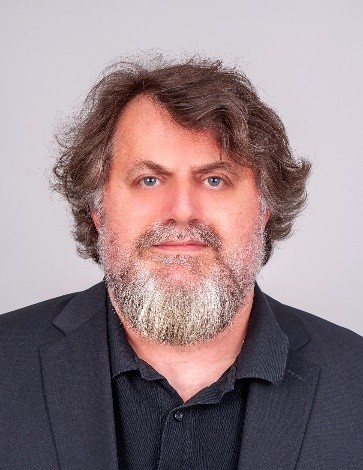
Prof. Dr. Robert Ćelić, DMD, is a specialist in prosthodontics and full professor at the School of Dental Medicine, University of Zagreb. Since graduating in 1995, he has worked at the Department of Dental Prosthetics, where he currently serves as Head of the Department of Removable Prosthetics. His clinical and research focus includes the rehabilitation of partially and completely edentulous patients, the application of CAD/CAM and 3D printing technologies, and the diagnosis and treatment of temporomandibular disorders. He is actively involved in implantology and provides professional education for dentists, specialists, and dental technicians. A certified European implantologist (BDIZ EDI), he is President of the national society of prosthodontic specialists and co-owner of the dental clinic Ars Salutaris in Zagreb.
Downloads
Published
How to Cite
Issue
Section
Categories
License
Copyright (c) 2025 Robert Ćelić

This work is licensed under a Creative Commons Attribution-NonCommercial 4.0 International License.