Autograft: Connective Tissue and Free Gingival Graft in Periodontal and Implant Surgery
DOI:
https://doi.org/10.3889/mmej.2025.6578Keywords:
Autograft, Connective Tissue Graft (CTG), Free Gingival Graft (FGG), Coronally Advanced Flap (CAF), Laterally positioned flap (LPF), Тunnel technique, Implant SurgeryAbstract
Introduction: The workshop aims to provide both theoretical and practical foundations for understanding and surgically managing gingival recession as part of contemporary periodontal surgery. Emphasis is placed on the etiology and classification of gingival recessions according to Miller, as well as the clinical significance of gingival biotype and keratinized gingiva, particularly in the context of implants and periodontal defects.
Theoretical Part: The theoretical part addresses the significance of the gingival biotype and its impact on treatment prognosis and stability. It provides a detailed analysis of the anatomical aspects involved in harvesting free gingival grafts (FGG) and connective tissue grafts (CTG), emphasizing the relationship with the palatine artery (a. palatina) and key surgical safety parameters. Additionally, the principles of soft tissue augmentation in the anterior mandible are discussed, along with the indications and surgical protocols for the Coronally Advanced Flap (CAF), Lateral Pedicle Flap (LPF), tunnel technique, and VISTA tunnel technique. Potential intra- and postoperative complications are examined, including strategies for their prevention. The theoretical part also includes demonstrations of techniques for harvesting and applying autologous grafts, as well as advanced suturing techniques, such as the double W-suture and Sling suture, aimed at ensuring optimal graft stability, integration, and aesthetic outcomes. Finally, clinical cases are presented with an analysis of technique selection, treatment protocols, and achieved results.
Practical Part: The practical part is structured in two consecutive segments. First, techniques for harvesting FGG and CTG are refined on a model made of tomatoes, with a focus on precision and control during harvesting. Then, the acquired surgical skills are applied on animal models (pоrcine or lamb jaws), including the design of CAF, graft application, and execution of appropriate suturing techniques on both the donor and recipient sites.
Conclusion: The workshop enables systematic acquisition of theoretical knowledge and practical skills for the surgical correction of gingival recessions. The combination of autologous grafting techniques with proper flap and suturing approaches represents a key component for successful regenerative and esthetic periodontal therapy.
Downloads
Author Biography
Zhaklina Mencheva, University Dental Clinical Center “St. Pantelejmon”, Clinic for Oral Surgery and Implantology - Skopje, RN Macedonia; Faculty of Dental Medicine, MIT University, Skopje, RN Macedonia
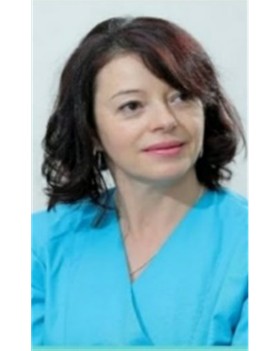
Prim. Asst. Prof. Dr. Sci. Žaklina Menčeva was born in Skopje, North Macedonia. She graduated from the Faculty of Dentistry at Ss. Cyril and Methodius University in Skopje in 1998 and has been employed at the Clinic for Oral Surgery at the University Clinical Dental Center “St. Panteleimon” since 2000. She specialized in oral surgery from 2003 to 2005 and in 2012 defended her master’s thesis on surgical approaches for impacted mandibular molars. In 2019 she obtained the title Primarius, and in 2022 earned her PhD on surgical methods for treating soft tissue defects in oral surgery. She is the author or co-author of over 50 publications, has been a licensed educator for residents since 2014, and is a member of several professional dental organizations, including EDI.
Downloads
Published
How to Cite
Issue
Section
Categories
License
Copyright (c) 2025 Zhaklina Mencheva

This work is licensed under a Creative Commons Attribution-NonCommercial 4.0 International License.