Macro- and Microdesign of Pterygoid Implants: Determining Primary and Secondary Stability
DOI:
https://doi.org/10.3889/mmej.2026.6896Keywords:
pterygoid implants, macrodesign, microdesign, primary stability, secondary stability, osseointegration, CBCTAbstract
INTRODUCTION: Pterygoid implantology enables implant placement and anchorage in the cortical bone of the pterygoid process of the sphenoid bone (processus pterygoideus ossis sphenoidalis). This approach represents a contemporary treatment option for patients with severe atrophy of the posterior maxilla, potentially avoiding extensive bone augmentation procedures while providing conditions for functional prosthetic loading. Its clinical rationale is based on the utilization of dense cortical bone in the pterygomaxillary region, which facilitates the achievement of adequate primary stability.
AIM: The aim of this lecture is to present the significance and characteristics of the macro- and microdesign of pterygoid implants, as well as the factors influencing the achievement and maintenance of their primary and secondary stability.
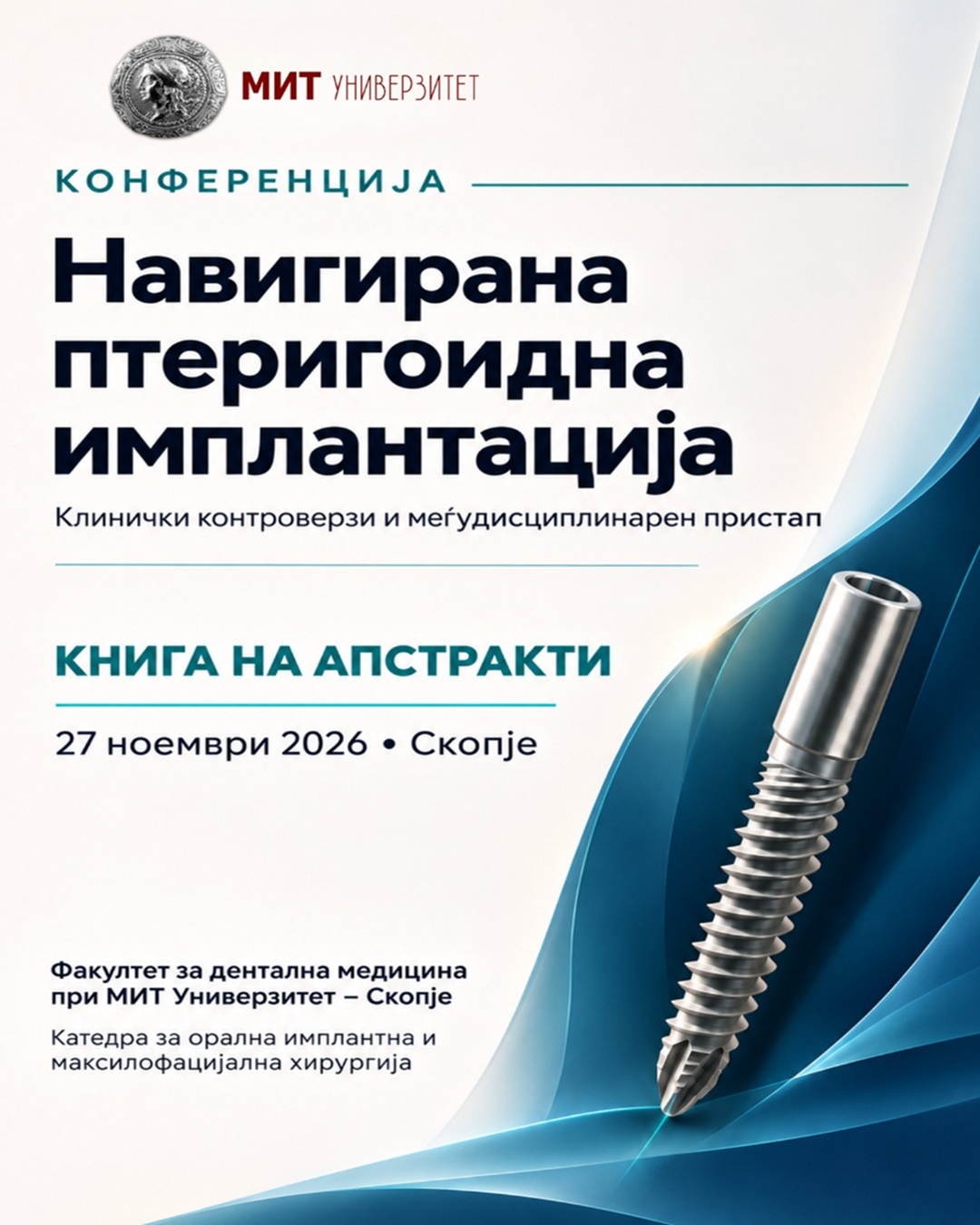
LECTURE CONTENT: The lecture will address contemporary concepts in the planning and placement of pterygoid implants, with particular emphasis on the role of cone-beam computed tomography (CBCT) in assessing bone volume, density, and continuity of the bony bridge between the maxillary tuberosity, the pyramidal process of the palatine bone, and the pterygoid process of the sphenoid bone. Particular attention will be given to determining the implant trajectory and length, commonly within the range of 13–18 mm, as well as identifying potentially vulnerable anatomical structures, including the pterygopalatine fossa, the greater palatine artery (a. palatina major), and the maxillary sinus.
Primary stability will be discussed in relation to bone quality and density, surgical site preparation, the relationship between osteotomy diameter and implant design, and the self-tapping capacity of the implant. The characteristics of implants featuring aggressive threads, greater length, and appropriate mechanical properties, which enable optimal contact with cortical bone, will be presented. The possibility of tricortical anchorage will also be discussed, depending on the anatomical conditions and the selected implant trajectory.
Secondary stability, or osseointegration, will be examined through the interaction between the implant surface and the surrounding bone. Particular emphasis will be placed on the influence of implant surface macro- and microtopography, physicochemical properties, surface free energy, and hydrophilicity on the processes of healing and bone integration. Endogenous and exogenous factors affecting bone metabolism and remodelling will also be addressed, including general medical status, hormonal and metabolic profiles, smoking, previous radiotherapy, and vitamin D and calcium status.
CONCLUSION: The success of pterygoid implant placement depends on appropriate preoperative planning, the selection of a suitable implant macro- and microdesign, and the achievement of optimal primary stability, followed by successful osseointegration. Understanding the biomechanical, anatomical, and biological factors is essential for achieving predictable long-term clinical outcomes.
Downloads
Author Biography
Daniela Veleska-Stevkovska, Department of Implantology, Faculty of Dentistry, Ss. Cyril and Methodius University in Skopje, Skopje, Republic of North Macedonia; University Dental Clinical Centre “St. Panteleimon”, Clinic of Oral Surgery, Skopje, Republic of North Macedonia
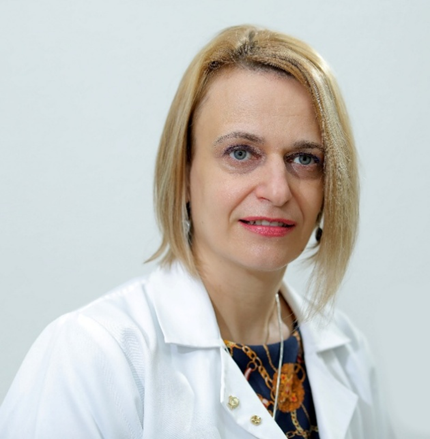
Prof. Dr. Daniela Veleska-Stevkovska is a specialist in Oral Surgery and a subspecialist in Oral Implantology, with extensive clinical and academic experience. Since 2001, she has been working at the Clinic of Oral Surgery, University Dental Clinical Centre “St. Panteleimon” in Skopje. In December 2023, she was appointed Full Professor at the Department of Implantology, Faculty of Dentistry in Skopje. She obtained her PhD in Dental Sciences in 2013. She is the author and co-author of approximately 100 scientific papers presented at national and international congresses. She has participated in research projects, scientific publications, and student education. She has organized and delivered more than 20 professional courses and workshops in implantology, oral surgery, bone and soft tissue regeneration, and regenerative medicine. Since December 2021, she has served as President of the Association of Specialists in Oral Surgery and Implantology within the Macedonian Dental Society.
Downloads
Published
How to Cite
License
Copyright (c) 2026 Daniela Veleska-Stevkovska

This work is licensed under a Creative Commons Attribution-NonCommercial 4.0 International License.