Neurosurgical Complications in Pterygoid Implantology
DOI:
https://doi.org/10.3889/mmej.2026.6897Keywords:
pterygoid implant placement, dental implantology, surgical complications, pterygoid venous plexus, maxillary artery, computer-guided implant surgeryAbstract
INTRODUCTION: Pterygoid implant placement is a specialized surgical technique in dental implantology that provides prosthetic support in the posterior maxilla, particularly in patients with reduced bone volume where conventional implant placement is limited. However, the anatomical complexity and variability of the pterygoid region, together with the proximity of major neurovascular structures, make this procedure challenging and potentially risky.
AIM: To present the most significant intraoperative and postoperative complications associated with pterygoid implant placement, their clinical implications, and preventive strategies through careful preoperative assessment, contemporary surgical planning, and navigation techniques.
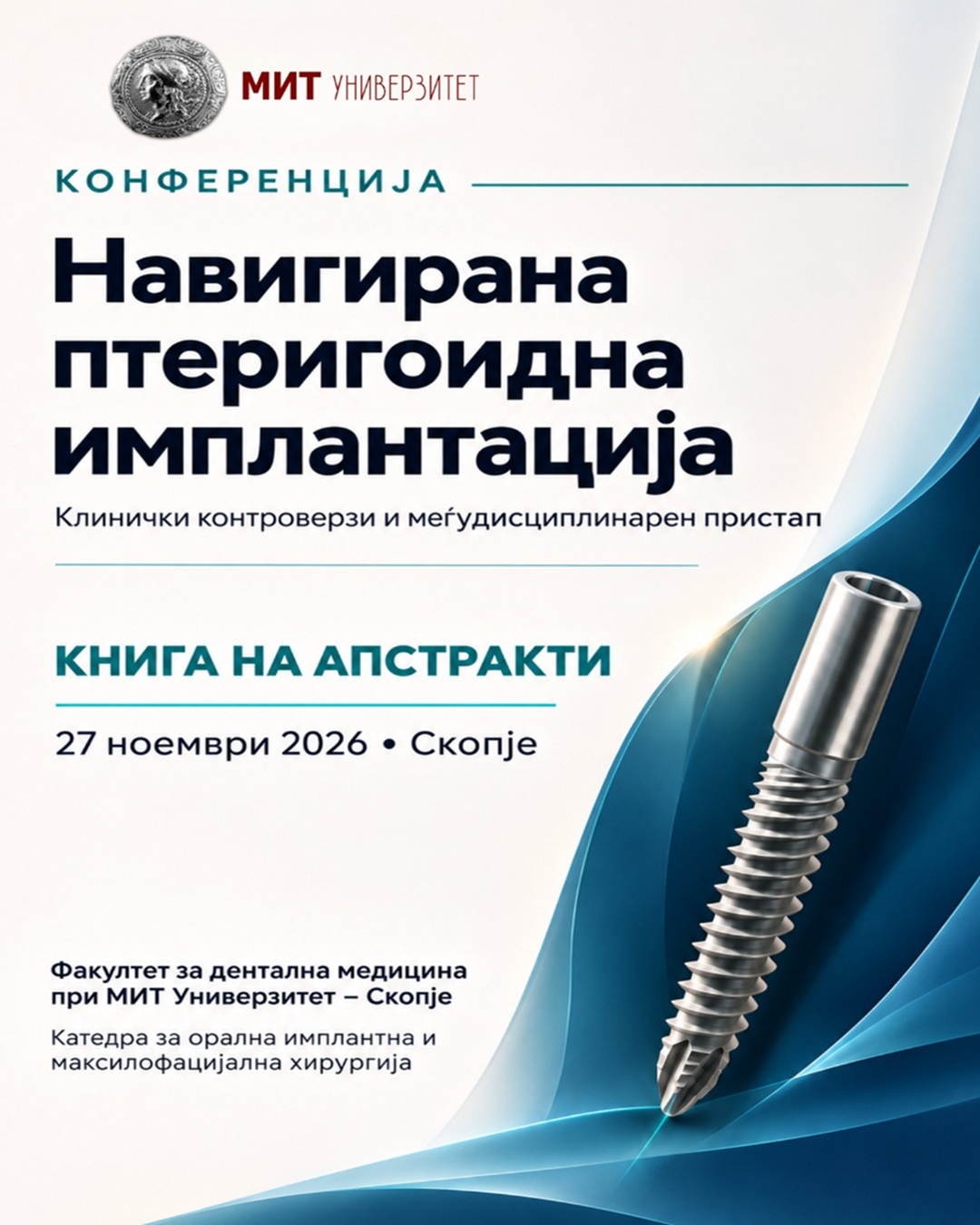
LECTURE CONTENT: The lecture will address the anatomical characteristics of the pterygoid region and potential risks associated with pterygoid implant placement. Particular attention will be given to injuries involving neurovascular structures, including the pterygoid venous plexus and maxillary artery, which may result in intraoperative bleeding, hematomas, and other serious consequences. Infectious complications and their potential consequences will also be discussed, including rare but severe conditions such as intracranial infections, meningitis, brain abscesses, and cavernous sinus thrombosis. The importance of understanding anatomical variations, CBCT-based assessment, precise preoperative planning, and the application of contemporary navigation technologies in controlling the surgical trajectory and minimizing risks will be emphasized.
CONCLUSION: Pterygoid implant placement represents an important treatment option for patients with limited anatomical conditions for conventional implant placement in the posterior maxilla; however, it requires a high level of surgical expertise and meticulous planning. Awareness of anatomical risks, appropriate patient selection, precise CBCT assessment, and the application of contemporary navigation technologies are essential factors in complication prevention and achieving predictable clinical outcomes.
Downloads
Author Biography
Ljubomir Ivchev, MIT University – Skopje, Faculty of Dental Medicine, Skopje, Republic of North Macedonia; General City Hospital “8 September”, Skopje, Republic of North Macedonia.
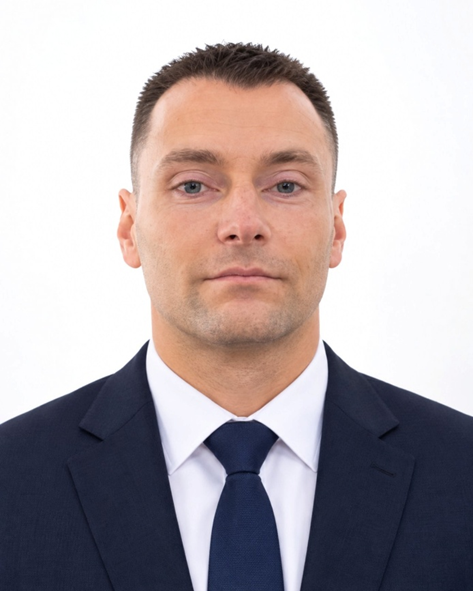
Assist. Prof. Dr. Ljubomir Ivchev is a neurosurgeon at the General City Hospital “8 September” in Skopje, North Macedonia. He graduated from the Faculty of Medicine, Ss. Cyril and Methodius University in Skopje, in 2018, and completed his specialization in neurosurgery in 2025. During his specialist training, he completed clinical rotations at Acibadem Sistina Clinical Hospital in Skopje and additional training in emergency neurosurgery and spinal surgery at Pirogov Emergency Hospital, as well as elective neurosurgical training at St. Ivan Rilski University Hospital in Sofia, Bulgaria. He obtained his PhD in Basic and Clinical Medical Research at Goce Delchev University in Štip in 2026. In October 2026, he was elected Assistant Professor of Neurosurgery at MIT University in Skopje. His professional and research interests include neurosurgery, spinal surgery, and clinical research. He is the author of four scientific papers, including one published in a journal with an impact factor, and co-author of seven additional scientific publications. He has actively participated in numerous national and international neurosurgical and spinal surgery congresses and professional training programmes.
Downloads
Published
How to Cite
License
Copyright (c) 2026 Ljubomir Ivchev

This work is licensed under a Creative Commons Attribution-NonCommercial 4.0 International License.