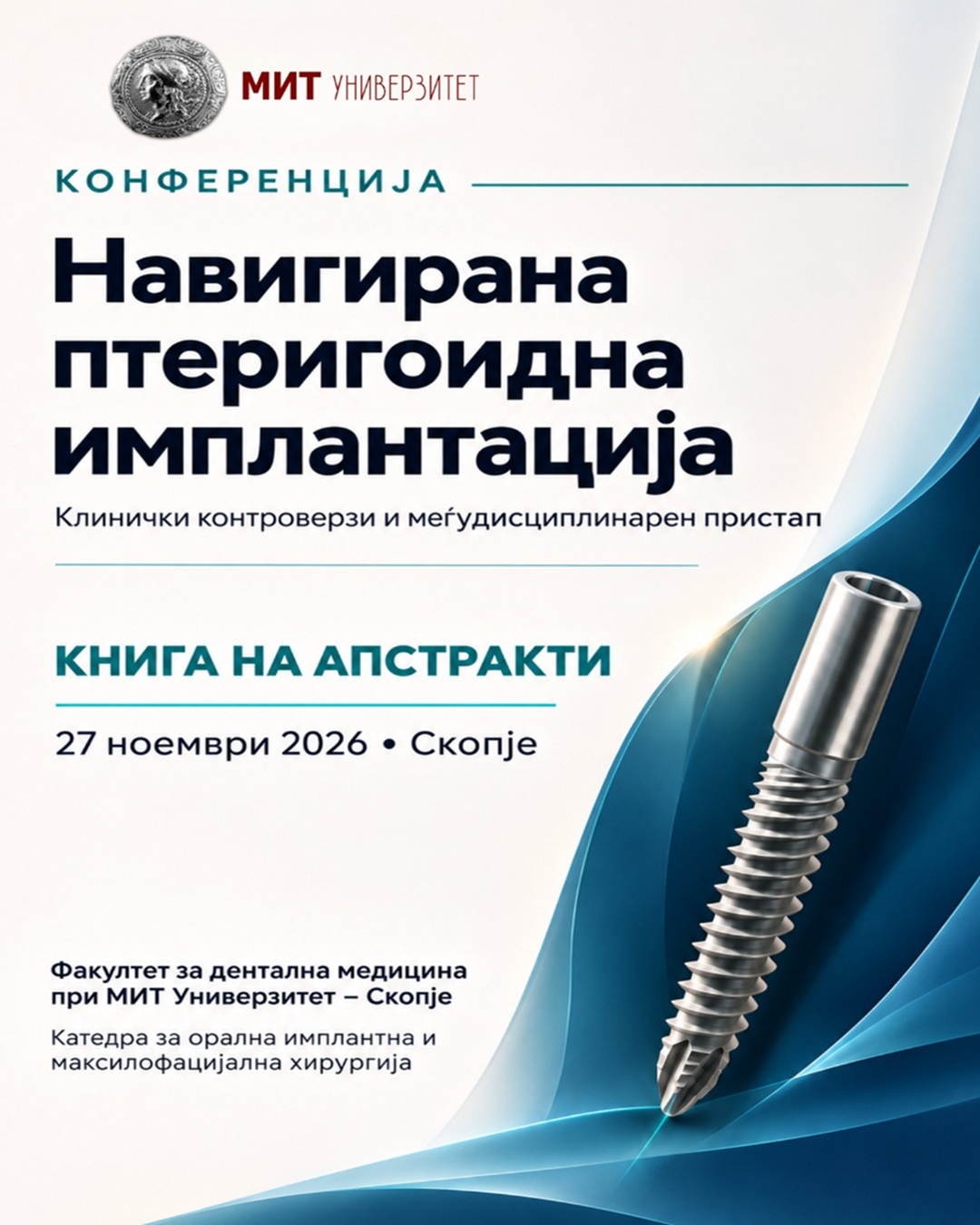
Use of Surgical Guides in Pterygoid Dental Implant Placement
DOI:
https://doi.org/10.3889/mmej.2026.6900Keywords:
pterygoid implants, surgical guides, guided implant surgery, digital planning, CBCT, surgical accuracyAbstract
INTRODUCTION: Guided implant surgery represents a contemporary approach to implant-prosthetic rehabilitation, enabling more accurate and predictable dental implant placement through digital planning and the use of surgical guides. Its application is particularly relevant in pterygoid implant placement, which represents a therapeutic option for the rehabilitation of the atrophic posterior maxilla and may, in selected clinical cases, eliminate the need for additional augmentation procedures.
AIM: The aim of this lecture is to present the applications and clinical significance of surgical guides in pterygoid implant placement, with particular emphasis on digital planning, surgical accuracy, appropriate patient selection, and the prevention of potential complications.
LECTURE CONTENT: The anatomical characteristics of the pterygomaxillary region and the importance of detailed preoperative assessment in pterygoid implant planning will be discussed. Particular attention will be given to cone-beam computed tomography (CBCT) analysis, its integration with intraoral scans, and the three-dimensional determination of the optimal implant position, angulation, and length. The principles of designing and applying static surgical guides, their role in accurately transferring the virtual plan to the clinical setting, and their limitations will be presented. Furthermore, factors affecting procedural safety will be addressed, including control of the surgical trajectory, protection of adjacent anatomical structures, achievement of primary stability, and selection of an appropriate prosthetic concept.
CONCLUSION: The use of surgical guides, combined with digital planning and appropriate preventive protocols, may contribute to greater accuracy and predictability in pterygoid implant placement. However, treatment success depends on individual anatomical characteristics, appropriate patient selection, surgical expertise, and long-term maintenance of peri-implant tissues.
Downloads
Author Biography
Vancho Spirov, Clinic of Oral Surgery and Implantology, University Dental Clinical Center “St. Pantelejmon”, Skopje, North Macedonia; Faculty of Medical Sciences, University “Goce Delchev”, Shtip, North Macedonia
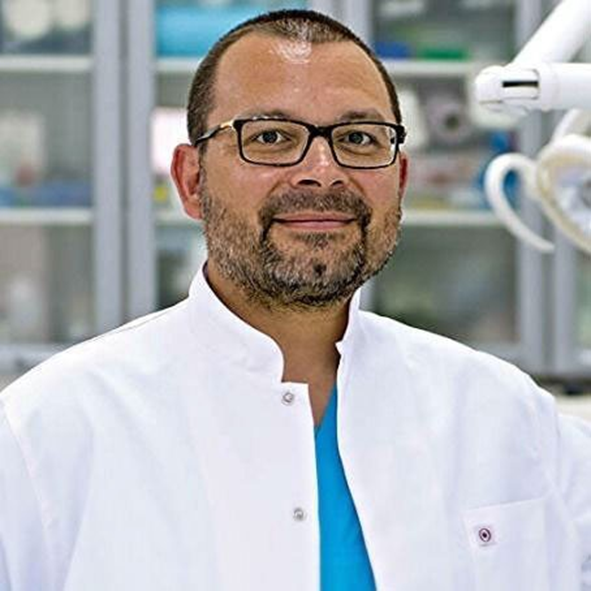
Asst. Prof. Dr. Vancho Spirov works at the Clinic of Oral Surgery and Implantology, University Dental Clinical Center “St. Pantelejmon” – Skopje, and is an Assistant Professor at the Faculty of Medical Sciences, University “Goce Delchev” – Shtip. He completed his specialized training in implantology at the Faculty of Dentistry in Istanbul and further advanced his education at the Hadassah School, Hebrew University, Israel. He is the author and co-author of 70 scientific papers published in national and international journals. In 2014, he was recognized among the 100 best doctors in North Macedonia, and in 2017 he received the national “Goce Delchev” award for achievements in medicine and healthcare. He is a member of the European Association for Osseointegration, the Macedonian Dental Association, the Macedonian Association for Implantology, and the Association of Oral Surgeons of North Macedonia.
Downloads
Published
How to Cite
License
Copyright (c) 2026 Vancho Spirov

This work is licensed under a Creative Commons Attribution-NonCommercial 4.0 International License.