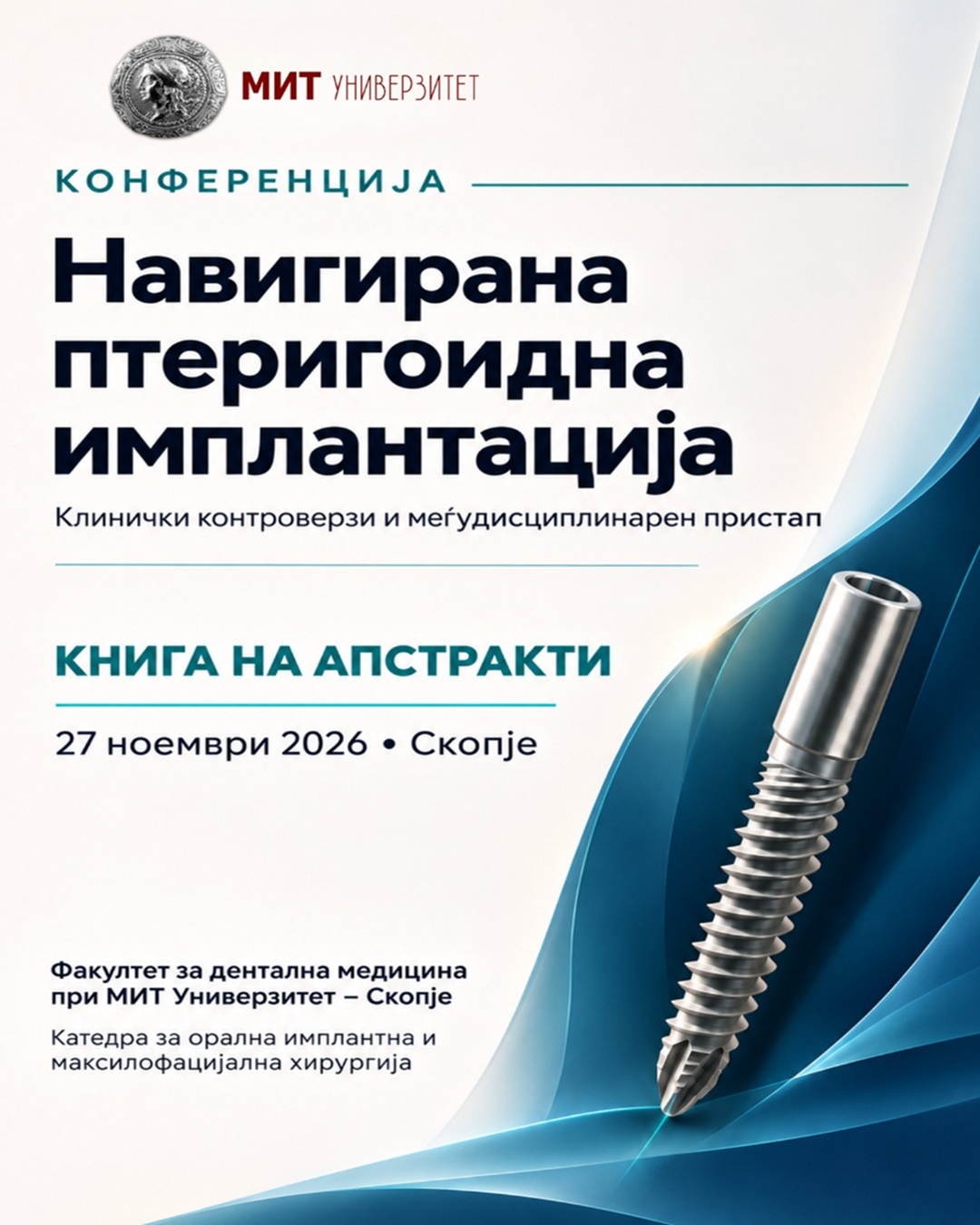
Controversies in Pterygoid Implantology
DOI:
https://doi.org/10.3889/mmej.2026.6890Keywords:
pterygoid implants, pterygoid implantology, maxillary atrophy, CBCT, cortical anchorage, primary stability, cantileverAbstract
INTRODUCTION: Pterygoid implant placement represents a contemporary therapeutic approach to the management of severe posterior maxillary atrophy. In addition to providing stable implant anchorage in the pterygomaxillary region, this technique may offer a less invasive alternative to certain augmentation procedures, such as maxillary sinus floor elevation and zygomatic implant placement. The choice of treatment approach depends on the individual clinical condition, anatomical circumstances, and the clinician’s assessment. Contemporary implant treatment planning aims to eliminate the need for a cantilever in the posterior maxilla.
AIM: The aim of this lecture is to discuss the clinical challenges, anatomical limitations, and controversies associated with the planning and placement of pterygoid implants, with particular emphasis on their role in achieving long-term stability of implant-supported prosthetic reconstructions in edentulous maxillae.
LECTURE CONTENT: Particular attention will be given to the importance of cone-beam computed tomography (CBCT) as the basis for preoperative planning of pterygoid implant placement. The assessment will include the volume of the maxillary tuberosity, the angulation of the pterygoid processes in relation to the alveolar ridge, and the anatomical characteristics of the medial pterygoid process as reference parameters for determining the implant trajectory.
The clinical aspects of placing the so-called “blind” pterygoid implant will also be presented. During this procedure, the deep portion of the surgical preparation is not directly visualized. Consequently, successful placement requires detailed anatomical knowledge, precise spatial orientation, and a well-developed tactile sense. Palpatory identification of the pterygoid hamulus (hamulus pterygoideus) and the distal aspect of the maxillary tuberosity provides additional clinical guidance during the procedure.
The pterygomaxillary region is characterized by considerable anatomical variations; therefore, successful implant placement requires appropriate training, clinical experience, and an individualized approach. The lecture will address the possibilities of achieving cortical anchorage in the pterygoid process, the role of implant geometry and design, and the factors influencing primary stability and osseointegration. Particular attention will be given to the concept of the pterygoid implant as a “rescue implant”, representing an important therapeutic option for providing posterior implant support and reducing or eliminating cantilevers in patients with complete maxillary edentulism.
CONCLUSION: Pterygoid implantology represents an important therapeutic option for the reconstruction of the atrophic posterior maxilla. Its predictability depends on accurate radiological planning, knowledge of anatomical variations, clinical expertise, and appropriate implant system selection. Pterygoid implants play a significant role in achieving stable posterior support and long-term functionality of implant-supported prosthetic reconstructions.
Downloads
Author Biography
Marjan Stojanovski, Dental Center D-r Stojanovski, Skopje, Republic of North Macedonia
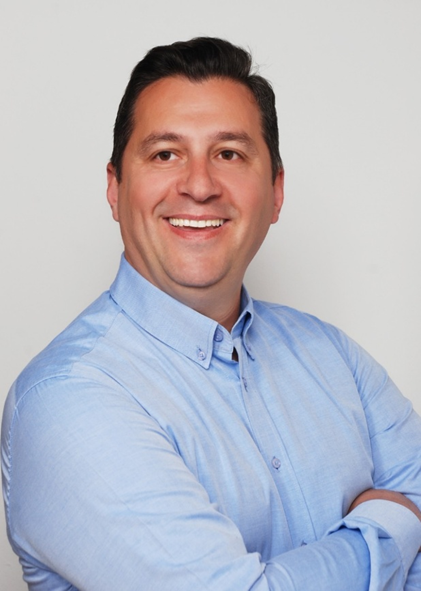
Dr. Marjan Stojanovski is a graduate of the Faculty of Dentistry, Ss. Cyril and Methodius University, Skopje, where he also completed his postgraduate studies and specialty in periodontology. An implantologist since 2005, he specializes in bone regeneration, peri-implantitis therapy, and full-arch implant surgery as a member of the Full Arch Club. Dr. Stojanovski is an international implant trainer and speaker for Schutz Dental Group (DGZI) since 2013, NOVODENT, Implantswiss IMPLANCE-AGGRESSOR, and PACE, participating in numerous global congresses, live surgeries, and cadaver training courses. He has worked on the development of several imlant geometries in the last 4 years. He has published clinical cases in the World Journal of Implantology and owns the Dental Center D-r Stojanovski in Skopje. His work and clinical techniques are shared through his YouTube channel, “Dental Center Stojanovski,” showcasing advanced implantology and full-arch solutions.
Downloads
Published
How to Cite
License
Copyright (c) 2026 Marjan Stojanovski

This work is licensed under a Creative Commons Attribution-NonCommercial 4.0 International License.