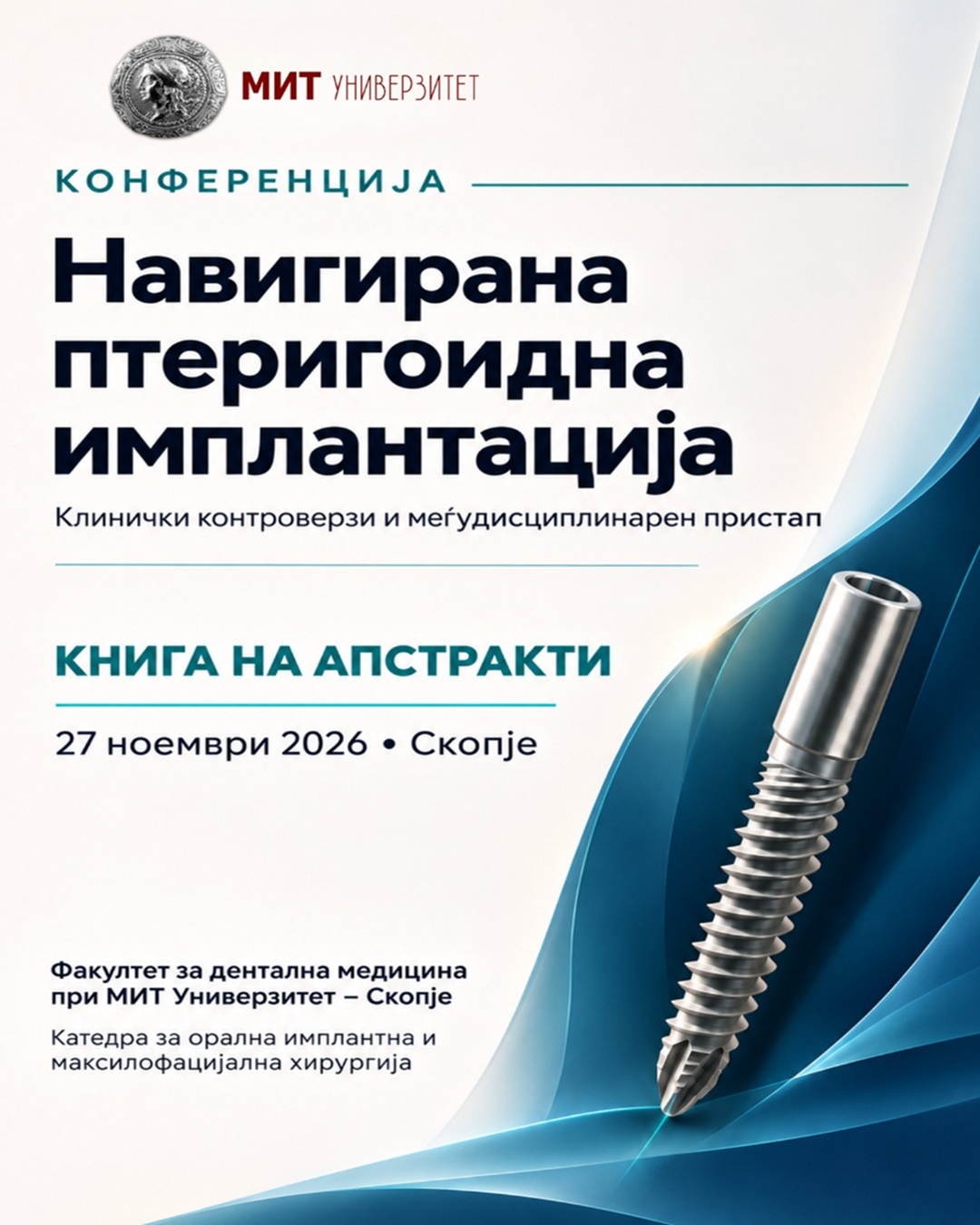
Navigated Pterygoid Implantology
DOI:
https://doi.org/10.3889/mmej.2026.6893Keywords:
pterygoid implants, dynamic navigation, digital planning, CBCT, surgical precision, implantologyAbstract
INTRODUCTION: Pterygoid implant placement represents a contemporary therapeutic option for the rehabilitation of patients with severe atrophy of the posterior maxilla. The procedure is performed in an anatomically complex region with limited visibility, making surgical precision essential for treatment safety and predictability. Dynamic navigation enables the transfer of the virtually planned implant position to the surgical field, with continuous real-time tracking of instrument position and orientation.
AIM: The aim of this lecture is to present the clinical applications and significance of dynamic navigation in pterygoid implant placement, with particular emphasis on surgical accuracy, implant trajectory control, and reducing the risk of surgical errors.
LECTURE CONTENT: The anatomical characteristics and individual variations of the pterygomaxillary region will be discussed, with particular reference to its proximity to the maxillary sinus, greater palatine canal, and vital neurovascular structures. The limitations of conventional free-hand surgery will be analyzed, particularly the transfer of the virtual plan to the surgical field, which relies on the surgeon's experience, spatial orientation, and tactile feedback. Special attention will be given to dynamic navigation, based on CBCT analysis and virtual planning, which uses an optical tracking system to monitor the instrument tip position, direction, angulation, and depth in real time. Its advantages in controlling the surgical trajectory, correcting deviations, and preventing potential complications during pterygoid implant placement will also be addressed.
CONCLUSION: Dynamic navigation represents a significant technological advancement in contemporary pterygoid implantology. Although it does not completely eliminate surgical risks, it enables continuous instrument tracking, more accurate transfer of the virtual plan, and a reduced likelihood of surgical errors. Its application contributes to greater predictability and standardization of complex implant procedures.
Downloads
Author Biography
Ivica Dubravica , Poliklinika Dubravica, Vodice, Republic of Croatia
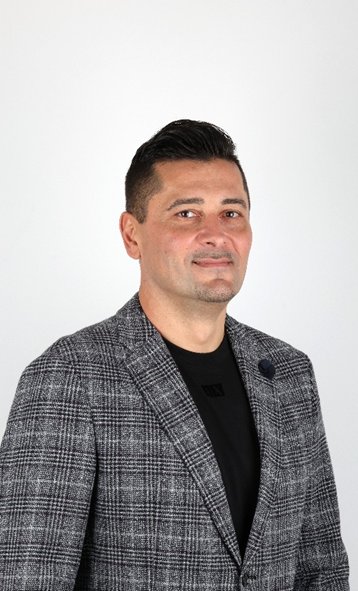
Dr. Ivica Dubravica (DMD, MSc) is a dentist, implantologist, and lecturer with extensive clinical and educational experience. He graduated from the School of Dental Medicine, University of Zagreb, and completed postgraduate studies at the Faculty of Medicine, University of Münster, Germany, and FACOP University in Bauru, Brazil. His professional interests focus on contemporary dental implantology, with particular emphasis on digital principles and protocols in implant-prosthetic rehabilitation of fully edentulous patients. He is a member of several professional associations and is actively involved as a lecturer and mentor in professional educational programmes, including live surgical demonstrations and hands-on training courses. For more than 20 years, he has successfully managed his private healthcare institution, Poliklinika Dubravica.
Downloads
Published
How to Cite
License
Copyright (c) 2026 Ivica Dubravica

This work is licensed under a Creative Commons Attribution-NonCommercial 4.0 International License.